Translucent or Blackout? How to Choose the Right Window Treatment
Updated: Sep 25
Understanding the difference between soft daylight and deeper light control — and where each makes the most sense.

When choosing window treatments, one of the first questions people often ask is:
Should I choose translucent or blackout?
The answer depends less on which one is “better” and more on what you want the room to feel like and how you use it.
Translucent and blackout fabrics serve very different purposes. Understanding the difference can make it much easier to choose the right solution for each room.
What Does Translucent Mean?
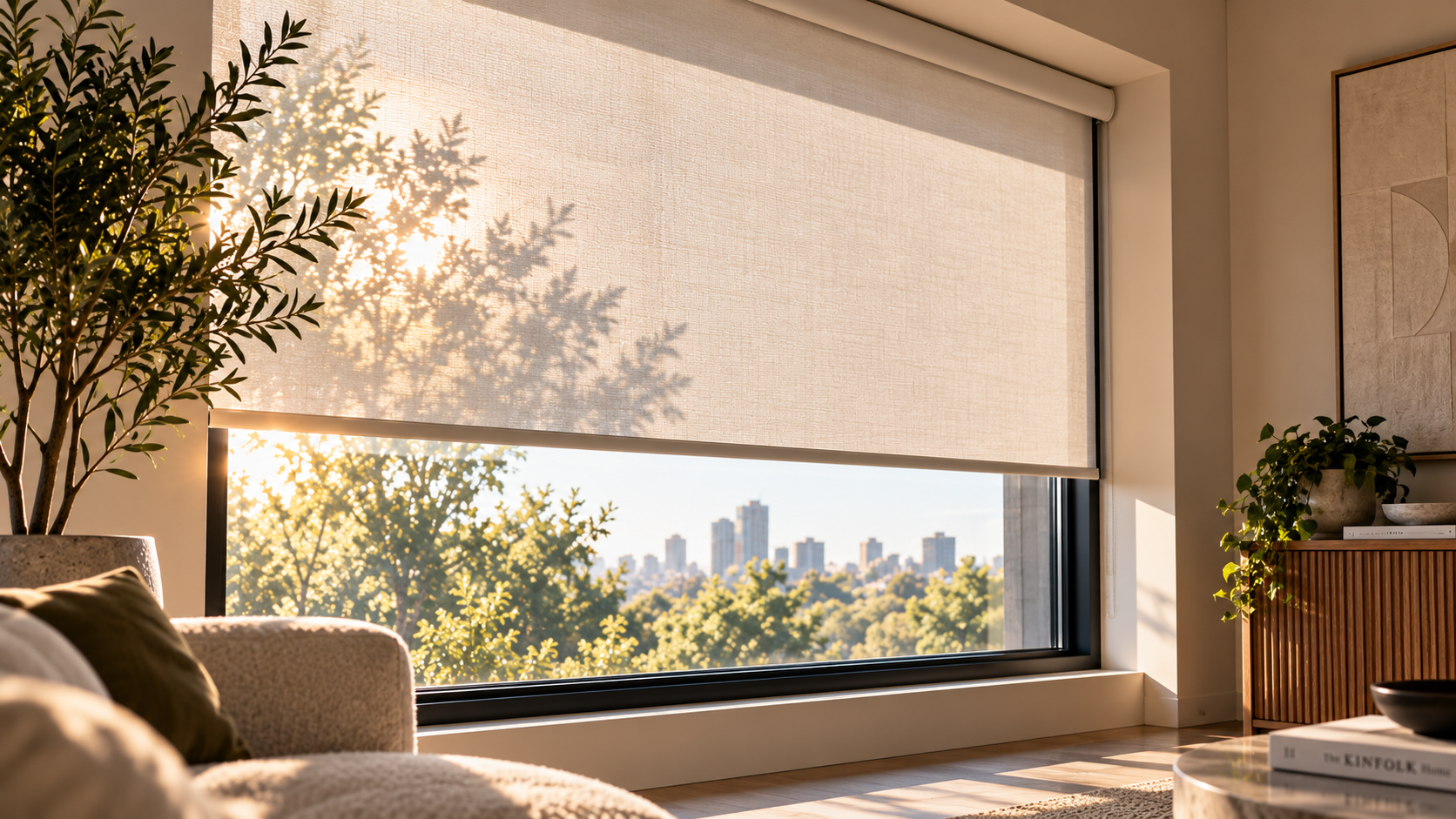
Translucent fabrics are designed to filter and soften natural light rather than block it.
Instead of creating a dark room, they diffuse incoming daylight, creating a softer and more comfortable atmosphere while providing a degree of daytime privacy.
The result is a room that still feels bright and connected to the outdoors — just with the harshness of direct sunlight reduced.
Translucent fabrics can be a beautiful choice for:
Living rooms
Dining areas
Open-concept spaces
Offices
Rooms where you want to preserve natural light
Spaces where maintaining a softer connection to the outdoors is important

What Does Blackout Mean?
Blackout fabrics are designed for significantly greater light control and privacy.
Rather than simply softening daylight, they can create a much darker environment when the shades are closed.
This makes them particularly useful in rooms where controlling light is more important than maintaining a bright connection to the outdoors.
Blackout fabrics are often well suited to:
Bedrooms
Media rooms
Guest rooms
Rest areas
Spaces where daytime darkness is desirable
Rooms requiring greater privacy
The effect can be dramatic.
A room that feels bright and exposed during the day can become quieter, darker and more intimate simply by closing the shades.

Translucent vs. Blackout at a Glance
Translucent | Blackout | |
Natural light | Softens and diffuses it | Provides significantly greater light control |
Atmosphere | Bright, soft and airy | Darker, quieter and more intimate |
Daytime privacy | Provides a degree of privacy | Greater privacy |
Exterior connection | Can maintain a softer connection to outdoors | Reduced when closed |
Ideal for | Living, dining and office areas | Bedrooms, media rooms and rest spaces |
The important thing to remember is that the right choice depends on the room.
And sometimes, a project calls for both.
One Home Can Need Both
There’s no reason every window in a home needs to use the same fabric.
You might choose translucent shades in the living room to enjoy natural light throughout the day, while selecting blackout shades in the bedrooms for greater control when it’s time to sleep.
An office might benefit from a fabric that reduces glare while maintaining daylight, while a media room may call for substantially more darkness.
Think room by room.
Rather than asking:
“Which fabric should I choose?”
Ask:
“What do I want this room to do?”
That simple shift can make the decision much easier.

Don’t Forget About the Window Itself
The fabric isn’t the only factor affecting light control.
How a shade is fitted and mounted can make a meaningful difference.
For situations where minimizing light around the edges is particularly important, an outside-mount installation can help extend the shade beyond the window opening and reduce potential light gaps around the frame.
Window size, configuration, mounting position and the specific shade system all deserve consideration.
This is one of the reasons seeing the actual window — rather than choosing a fabric from a screen or catalogue — can be so valuable.
What About Duo Shades?
Duo Shades offer another approach to managing light and privacy.
Their alternating sheer and opaque bands allow you to adjust the relationship between the two throughout the day.
You can open the shade to maintain more light and exterior visibility, align the bands to soften incoming light, or close them further for increased privacy and reduced light.
For someone who wants more flexibility from a single window treatment, this can be an interesting alternative to choosing between two different fabric types.

So Which One Is Right for You?
There isn’t a universal answer.
Choose translucent when you want to embrace natural light while softening it.
Choose blackout when greater darkness, privacy and light control are the priority.
And if you’re looking for more flexibility, a Duo Shade may offer another way to balance light and privacy throughout the day.
The best choice ultimately comes down to your windows, your interior, your priorities and the way you actually use the room.
Not Sure Which Direction to Take?
That’s where thoughtful guidance can make the process easier.
At Textura Studio, we can help you look at the room as a whole — from natural light and privacy to fabrics, colours and the character of your interior.
We’ll help you narrow down the possibilities and find a window treatment that makes sense for the way you live or work.
Because choosing the right window treatment shouldn’t feel complicated.
It should feel right.
Ready to explore your options?
Let’s discover the right solution for your space.
