How to Choose the Right Window Treatments for Your Space
Updated: Sep 25
Light, privacy, style and everyday living all play a role in finding the right fit.
Choosing window treatments can seem simple at first.
Until you start looking at the options.

Roller shades. Duo shades. Different fabrics. Different levels of light control. Manual or motorized. And then there are colours, textures and finishes to consider.
The good news? You don’t need to know all the answers before you begin.
The right window treatment isn’t simply the one that looks beautiful. It’s the one that works beautifully for the way you live or work.
Here are a few things worth considering before making your choice.
1. Start With How You Use the Room
Before thinking about colour or fabric, think about what you actually need the room to do.
A bedroom may need privacy and a darker environment for sleeping. A living room might benefit from soft natural light and a connection to the outdoors. A home office may need better control of glare throughout the day.
And in a professional or commercial setting, the priorities can be different again — from managing daylight and privacy to creating a cohesive look across multiple windows.
There isn’t a single window treatment that’s right for every room.
Start with the experience you’re trying to create.
2. Consider the Light
Light can completely change how a room feels.
A bright south-facing window might fill a room with beautiful natural light in the morning, but create uncomfortable glare later in the day. Another room may feel better with light softly filtered rather than blocked altogether.
Think about:
How much natural light do you want to keep?
Do you want to maintain a view outside?
Is glare a problem at certain times of day?
Would you prefer a soft, diffused atmosphere?
Are there times when you need the room to become significantly darker?
Think in terms of control, not simply coverage.
Different fabrics provide different levels of openness and light control. Solar screen fabrics, for example, can help manage sunlight and glare while maintaining a connection to the outdoors. Translucent fabrics soften incoming light, while blackout fabrics provide substantially greater control when darkness and privacy are priorities.
The goal isn’t necessarily to block the light.
It’s to control it in a way that makes the room work better.

3. Think About Privacy
Privacy isn’t always the same throughout the day.
You may want to enjoy an open view during the day while still having more privacy in the evening. Or perhaps a bedroom, bathroom or street-facing office requires greater privacy throughout the day.
This is where the choice of fabric and shade style becomes important.
Consider when you need privacy — and how much.
Duo shades can be particularly interesting when flexibility is important, allowing you to adjust the relationship between openness, filtered light and privacy throughout the day.

4. Let the Interior Guide the Design
Window treatments shouldn’t feel like something added to the room at the end.
They should feel like they belong there.
Look at the materials and colours already present in your interior. Consider your flooring, furniture, walls, cabinetry and other textiles.
A window treatment can quietly complement those elements through a subtle neutral tone or natural texture.
Or it can become a more intentional part of the design.
Look beyond colour.
Texture matters too.
A fabric with a subtle weave can introduce warmth and depth without overwhelming a minimalist interior. A cleaner, more architectural fabric may work beautifully in a contemporary setting.
The best choice often isn’t the one that stands out the most.
It’s the one that makes everything around it feel more considered.

5. Choose the Right Type of Window Treatment
Once you’ve thought about light, privacy and design, the options become much easier to narrow down.
At Textura Studio, we focus on three core solutions:
Roller Shades
Clean, versatile and timeless.
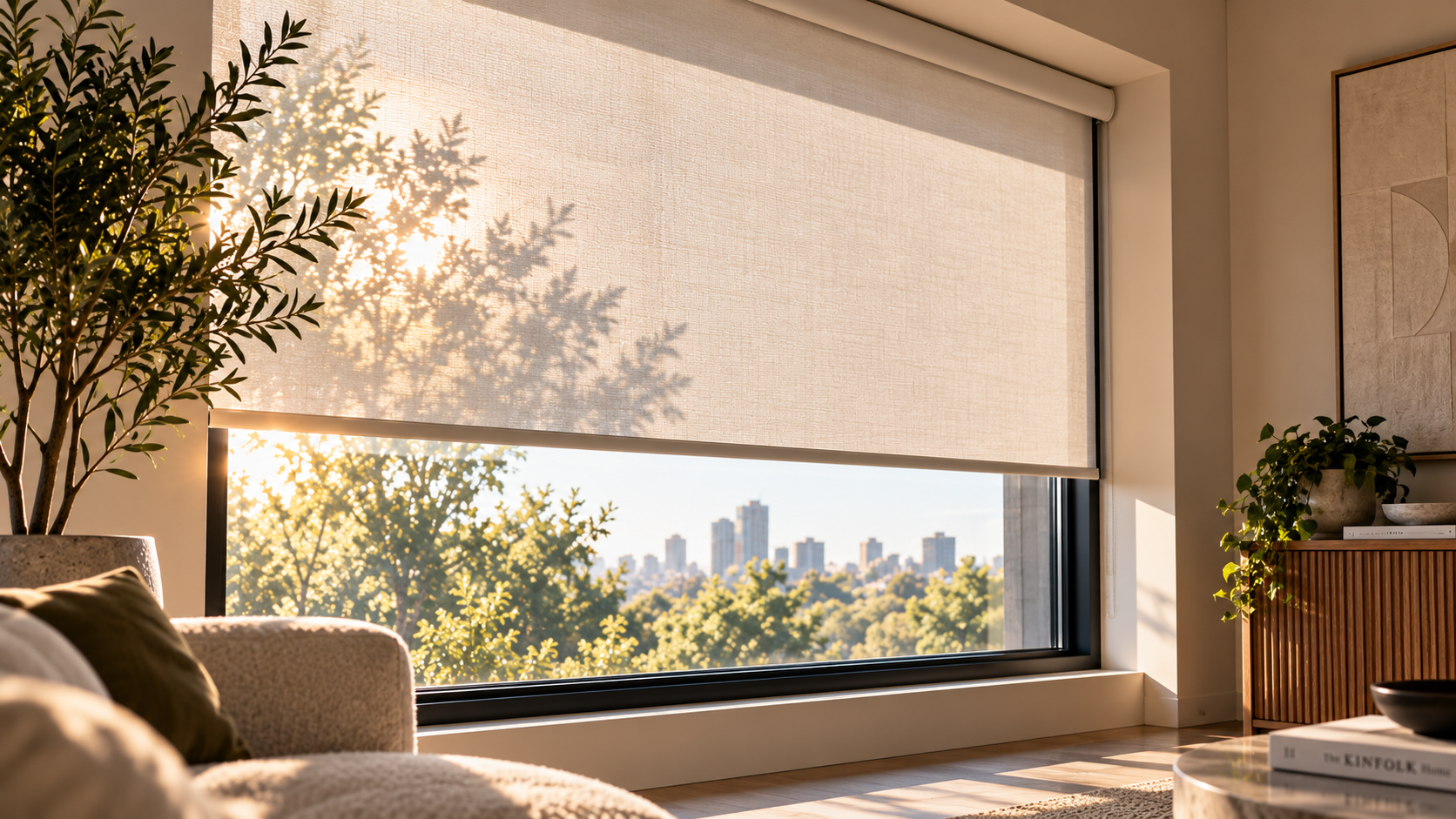
Roller shades can be tailored to provide different levels of light control and privacy, from solar screen fabrics that maintain a connection to the outdoors to translucent and blackout options.
Duo Shades
A more dynamic approach to light and privacy.
Alternating sheer and opaque bands allow you to adjust the balance between openness and privacy while adding a refined architectural element to the window.
Motorized Shades
For effortless everyday control.
Motorization allows shades to be adjusted quietly and precisely, whether from a remote, wall control or compatible smart-home system.
The right solution depends on what you’re trying to achieve — not simply what looks good in a catalogue.
6. Don’t Forget the Details

Once you’ve narrowed down the style and fabric, there are still a few practical details worth considering.
The size and configuration of your windows can influence the best approach. So can the way you want the treatment mounted, how frequently you’ll use it and whether you’d prefer manual or motorized operation.
These details may seem small. But they’re often what make the difference between a window treatment that simply fits and one that feels perfectly integrated.
And If You’re Not Sure Where to Start?
That’s completely normal. Choosing window treatments involves more than picking a colour or deciding between two styles. You’re balancing light, privacy, design, functionality and the way you actually experience the room.
You don’t have to figure it all out on your own.
A Textura Studio consultant can help you look at the room as a whole, understand what you’re trying to achieve and narrow the possibilities to a solution that feels right for both the design and the way you live or work.
Because we’re not here to convince you to buy blinds or shades.
We’re here to help you make a decision you’ll be happy with for years to come.
Ready to explore your options?
Let’s discover the right solution for your space.
